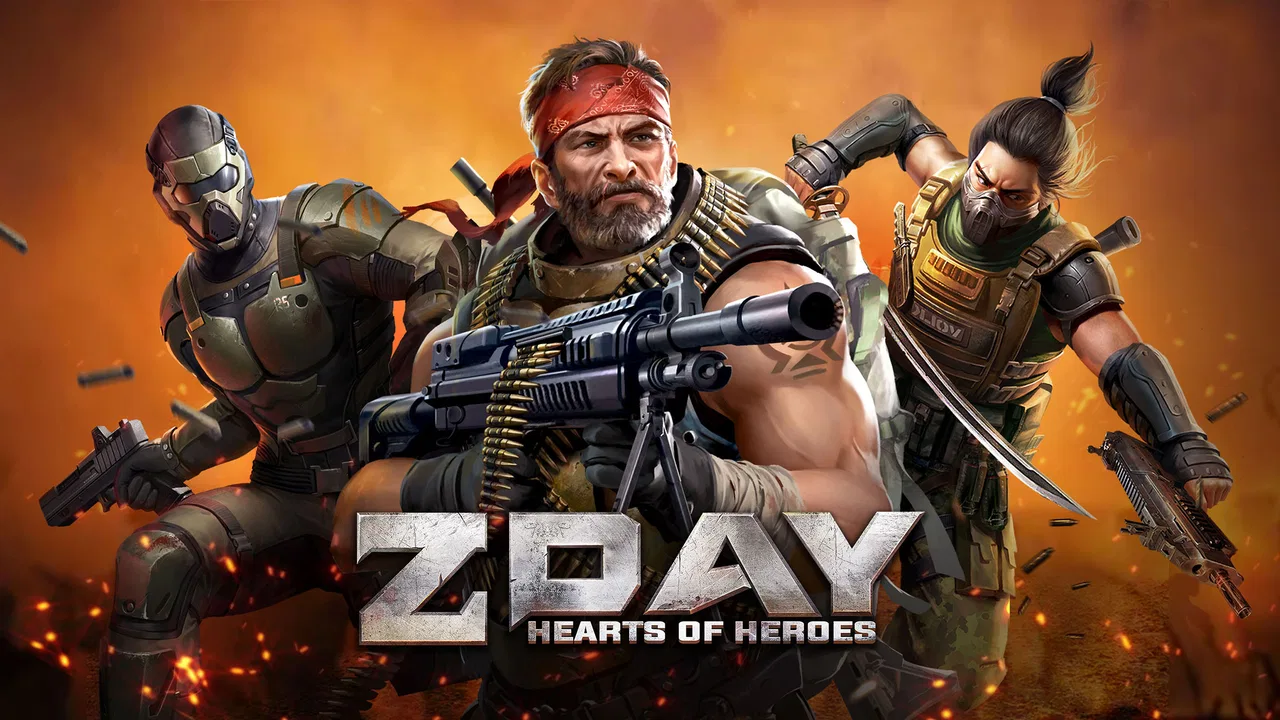
Z Day: Hearts of Heroes
- 3.6
- Rating
- 10.00M
- Installs
- Free
- Price

 Analysis by App-foxy
My first impression of Z Day: Hearts of Heroes was that it wants to make a strategy game feel like a continuing military campaign rather than a short puzzle session. It is a free strategy MMO from FunPlus International AG, built around a zombie-war setting and a persistent battlefield. That combination gives it an immediate pull: there is always another improvement to make, another objective to consider, or another reason to check what has changed while I was away.
That appeal is real, but it is also the first thing I would qualify for a friend. This is not the kind of strategy game I open for a quick, fully contained match and then finish. Its value depends on whether I enjoy returning to the same account, making gradual decisions, and living with the slower rhythm of a long-running mobile game. After spending time with it, I think the important question is not whether the opening is entertaining. It is whether the routine remains satisfying once the novelty of the setting has worn off.
What the first week feels like
The opening hours are designed to keep me moving. I am introduced to the post-apocalyptic conflict, given goals that point toward the next upgrade or battle, and encouraged to build a base of operations while learning how the wider war works. The presentation makes the early progress easy to follow, which matters because strategy MMOs can otherwise bury new players under menus and unfamiliar terms.
You May Also Like

 Blood Strike: 2.5 Anniversary
Blood Strike’s Loadouts Turn Every Drop Into a Tactical Gamble
A close look at Blood Strike’s custom loadouts: how fast access to signature weapons reshapes its battle royale rhythm, rewards preparation, and narrows the gap between fights.

 Pandora - Music & Podcasts
Pandora’s Music Is Easy to Start, but Harder to Recover
Pandora’s strength is its low-effort path from a seed to a station. Its weak spot is how much confidence it asks you to place in connection, setup, and quiet recovery.

 8 Ball Pool
 Is Built on Rivalries, Rematches, and Routine
A close look at the rivalries, rematches, shared routines, and unanswered safety questions that turn a quick pool match into a persistent mobile community.

 Samsung Music
’s Quiet Strength Is Playing What You Already Own
Its reach comes less from spectacle than from dependable access to a personal library. That simplicity is both the app’s strongest retention engine and its ceiling.

 AccuWeather: Weather Radar
AccuWeather Review: A Quick, Clear Forecast for Everyday Decisions
For everyday plans, the best forecast is the one you can understand quickly. AccuWeather makes rain timing, radar, and local conditions easy to act on, with a few trade-offs.

 Hill Climb Racing
Why Hill Climb Racing Still Turns Crashes Into One More Run
A tiny car, a bumpy hill and one more upgrade: Hill Climb Racing keeps resurfacing because its simple chaos makes every near-miss feel personal.
More From Our News Desk
View All News


I found the first week most enjoyable when I treated it as a learning period instead of trying to optimize everything immediately. The useful habit is to notice what each action unlocks, then decide whether it supports my immediate objective or merely makes the account look stronger on paper. That distinction becomes important quickly. A building that raises a visible number may be less useful right now than a development that improves the troops or resources I actually depend on.
The game is comfortable for players who like a clear checklist. Tasks, upgrades, and military decisions give the session a sense of direction, even when I only have a few minutes. At the same time, the amount of ongoing activity can make the screen feel busy. I had to slow down and read what I was committing to rather than tapping through every prompt. That small pause saved me from spending resources on choices that did not fit my current plan.
One of the less obvious strengths is how well the game turns waiting into planning. When an improvement or preparation step is underway, I can think about what should follow instead of treating the timer as dead time. I recommend keeping a simple priority in mind: strengthen the part of the account that helps me complete the next meaningful objective, not every available option at once. This prevents the early game from becoming a scattered collection of half-developed ideas.
The battlefield theme also gives the routine more personality than a plain construction simulator. The zombie setting supplies a reason for the military decisions, while the hero-focused presentation gives the account a recognizable identity. I would not call the story the main reason to stay, but it helps the first sessions feel like a campaign rather than a spreadsheet with combat effects.
New players should also know that the game is more comfortable with regular attention than with one long session. I get more from checking progress, collecting what is ready, and choosing the next task than from trying to force all progress at once. That is a useful fit for someone who likes mobile games woven into the day. It is less suitable for someone who wants a strategy title that can be fully enjoyed offline in a single sitting.
The Android requirements are relatively approachable: the game supports devices running Android 7.0 or later. It is rated Everyone 10+, which matches the accessible presentation, although the war and zombie themes may still be a poor fit for younger children or anyone looking for a calm, nonviolent game. The current version is 3.11.0, so I would keep the app updated when possible to avoid being left behind by changes to the live experience.
Where the early decisions matter
My best early tip is to resist spending every reward as soon as it appears. A new player can easily confuse activity with progress, especially when several upgrade paths are available. I prefer to identify one practical bottleneck, such as the requirement blocking the next useful improvement, and direct my attention there. This makes the account feel less chaotic and gives each session a clear purpose.
A second tip is to read the requirements before committing to a long upgrade chain. In a persistent strategy game, the cost of a decision is not only the resources used; it is also the time during which another option cannot be pursued. Thinking one step ahead helped me avoid creating a queue that looked productive but delayed the development I actually wanted.
Players who enjoy cooperation should pay attention to the social side early rather than treating it as an optional extra. An MMO strategy game is shaped by the people around it, and a coordinated group can make the world feel more active and give routine actions a larger purpose. Players who prefer complete independence may still enjoy the base-building layer, but they should expect the broader experience to feel less rewarding if they ignore the shared-war element.
What keeps it useful after the opening
The month-to-month value comes from accumulation. Each individual action is usually modest, but the account gradually becomes more capable, more specialized, and more connected to the larger conflict. I like that this gives ordinary sessions a reason to exist. A short visit can still matter if it keeps a development plan moving or prepares the next military decision.
That gradual structure is also the main trade-off. The game does not constantly deliver a dramatic payoff. Much of the satisfaction comes from seeing a plan mature over time. If I enjoy watching a settlement and its forces develop, this is a pleasant loop. If I need every session to end with a decisive victory or a major discovery, the routine can feel thin.
The strongest recurring use case is the player with a predictable daily rhythm. I can check in during a commute, after work, or between other tasks, review what has finished, and set up the next action. The game is particularly suited to someone who likes making a few meaningful choices throughout the day instead of sitting down for a long uninterrupted campaign.
For example, I might open it in the evening after a busy day, collect completed progress, inspect the next requirement, and choose whether to improve military strength or prepare the base for a later goal. I do not need to turn that visit into an hour-long session for it to feel worthwhile. The account benefits from consistency, and the player gets a small sense of control over the next day’s progress.
The recurring value is less convincing for someone who plays only once a week. Returning after a long gap can mean facing several decisions at once, remembering what was being developed, and catching up with a world that has continued without me. That is not necessarily a flaw in the design, but it changes the recommendation. The game rewards a habit; it is not ideal as an occasional strategy toy.
Its audience size suggests that the format has broad reach: it has passed ten million installs, with an average rating of 3.6 from roughly one hundred twenty-three thousand ratings. I read that as a sign of a substantial player base rather than proof that every player will enjoy it. The rating also supports my own impression that the game’s long-term structure will divide people. Some will appreciate the ongoing progression, while others will find the pace and monetization pressure tiring.
How it compares with familiar strategy alternatives
Compared with a traditional turn-based strategy game, this is less about completing a self-contained scenario and more about maintaining an evolving account. A turn-based alternative is usually better when I want transparent rules, a clean beginning and ending, and full control over the pace. Z Day: Hearts of Heroes is better when I want a persistent setting that keeps developing between sessions.
Compared with a quick competitive strategy game, it asks for more patience. A short-match title gives me an immediate result and a clear reset. Here, decisions can have consequences beyond one battle because they affect the account’s future readiness. That makes preparation more important, but it also means a poor choice can feel harder to shake off.
It also differs from a purely casual base-builder because the military theme is not just decoration. The game frames development around conflict, heroes, and survival, so the account feels directed toward a larger war. Still, players seeking a quiet decorating experience should look elsewhere. The strategic identity here depends on pressure, growth, and competition rather than relaxation.
One practical advantage is that the game is free to start, so I can test its rhythm without paying an entry fee. The important caution is that in-app purchases range from $0.99 to $99.99 per item. I would recommend deciding on a personal spending limit before the progression becomes familiar. The smaller purchases may look harmless in isolation, but the larger range makes it especially important to judge the game by the free routine first, not by how quickly paid options can accelerate it.
I also would not assume that spending automatically improves the experience. Faster progress can remove the very planning and anticipation that make a persistent strategy game satisfying. For me, the better test is whether the ordinary loop remains enjoyable when I ignore the temptation to speed things up. If it does, optional purchases remain optional. If it does not, spending is unlikely to solve the underlying problem.
The maintenance burden behind the fun
Long-term enjoyment depends on maintenance, and this is where the game asks more from me than a standard single-player strategy title. I need to remember what is under development, keep an eye on resources, and make sure the next action supports the direction I have chosen. None of that is unusually complicated on its own, but the combined routine can become another obligation.
I found it helpful to use a short personal rule: every login should answer one question. What is the next improvement or military goal that genuinely matters? That rule prevents me from opening the game simply to clear every notification. It also reduces the feeling that I am working through chores rather than playing.
The maintenance load rises when I try to follow every available opportunity. Events, objectives, upgrades, and social activity can compete for attention. I get a better experience by accepting that I will not optimize every system. Choosing a primary path makes the game more manageable and protects it from becoming a second job.
Another useful workflow is to make decisions in batches. Instead of repeatedly checking the game without a plan, I can review completed progress, choose the next development, and leave with a clear reason to return. This works especially well for people who want the game to fit around real life. It also exposes whether the core decisions are interesting enough to stand on their own.
Players may wonder whether the game requires constant attention. In my experience, it is better described as attention that is frequent and deliberate rather than permanently intense. Missing a short period does not erase the appeal, but the account feels more rewarding when I return regularly. Anyone who dislikes timers, recurring tasks, or persistent progression should treat that as a serious warning sign.
The game is also not the right pick for someone who wants a one-time purchase with a complete experience. Its free entry and optional purchases place it firmly in the modern mobile strategy model. That does not make it bad, but it means I have to evaluate the habits it encourages: regular check-ins, long-term upgrades, and the possibility of paying to change the pace.
Where fatigue begins
The first source of fatigue is repetition. The same broad pattern of checking progress, selecting an improvement, and preparing for the next objective can remain useful, but it does not remain fresh forever. The zombie-war framing softens the repetition, yet it cannot completely replace variety in the underlying routine.
The second is decision clutter. When several systems ask for attention at once, I can lose sight of the strategic question beneath the interface. The solution is not to interact with everything. I get better results by ignoring low-priority prompts and returning to the objective that best supports my chosen direction.
The third is the tension between patience and payment. Because the game is free and includes purchases across a wide price range, the player has to be comfortable with a progression model that may invite acceleration. I would skip it if the presence of purchasable shortcuts would make me feel pressured or frustrated. A game that occupies a regular place in my day should feel like a choice, not a billable obligation.
There is also a social fatigue that can appear in any MMO strategy game. Cooperation may add purpose, but it can also make the experience feel less flexible if I want to play entirely on my own schedule. Someone who enjoys alliances, shared goals, and a living competitive environment may find that energizing. Someone who wants to pause whenever life gets busy may prefer a self-contained alternative.
The age rating of Everyone 10+ makes the game broadly accessible, but the audience fit is still narrower than the label suggests. The real dividing line is not age alone; it is tolerance for combat themes, ongoing progression, and mobile monetization. Parents considering it for a child should also think about whether that recurring purchase structure suits their household rules.
My long-term verdict
After the first-week excitement fades, the lasting value comes from the planning habit, not the zombie theme alone. Z Day: Hearts of Heroes earns a place on my device when I want a persistent strategy MMO that can be visited in short, regular sessions. Its strongest qualities are the clear sense of gradual development, the military setting, and the way small decisions accumulate into a more capable account.
I would recommend it to players who enjoy base progression, strategic preparation, and a world that continues between visits. It is also a good fit for someone who likes having a daily game ritual without needing to finish a complete match every time. The free price makes it easy to try, and the Android compatibility beginning with version 7.0 keeps the entry barrier reasonable for many devices.
I would skip it if I want a campaign with a definite ending, a strategy game free from recurring maintenance, or a short competitive experience where every session resets cleanly. I would also be cautious if I know that in-app purchases make me impatient with normal progression. The game is more enjoyable when I accept its pace instead of constantly comparing free progress with paid acceleration.
My practical recommendation is to play through the opening period without spending, establish one development priority, and see whether returning to that routine still feels rewarding after the initial excitement. If the answer is yes, the game has enough ongoing structure to become a regular companion. If the answer is no, more upgrades or faster progress will not change the basic relationship.
Overall, this is a competent choice for a very specific kind of mobile strategist: someone who wants a continuing war to manage, enjoys making incremental decisions, and can keep the maintenance under control. It does not earn lasting space through constant novelty. It earns it when the player finds satisfaction in preparing today’s account for tomorrow’s battlefield.
FAQs for Z Day: Hearts of Heroes
01What is Z Day: Hearts of Heroes about?
Z Day: Hearts of Heroes is a strategy and base-building game set in an alternate World War II scenario where a mysterious weapon has transformed people into dangerous creatures. You manage a military base, train troops, research technologies, gather resources, and work with other players to survive. The game combines city development, real-time battles, alliances, and hero collection elements.
02Can I play Z Day: Hearts of Heroes offline?
No, Z Day: Hearts of Heroes is primarily an online multiplayer game and requires a stable internet connection for most of its features. Your base, events, alliance activities, battles, and progress are connected to the game servers. An offline mode is not available, so it is best suited to players who can regularly play while connected to Wi-Fi or mobile data.
03Is Z Day: Hearts of Heroes free to download and play?
Yes, the game can generally be downloaded and played for free on supported Android and iOS devices. However, it includes optional in-app purchases for resources, speed-ups, premium currency, special offers, and progression benefits. You can advance without spending money, but progress may take longer and competitive events can feel more demanding for free-to-play players.
04Does the game require teamwork with other players?
Although you can develop your base and complete several activities independently, joining an alliance is strongly recommended. Alliance members can help reduce construction and research times, participate in group battles, exchange support, and compete in larger events. Players who prefer completely solo gameplay may still enjoy the strategy systems, but they will miss some of the most rewarding multiplayer content.
05What should I know about device requirements and gameplay style?
Z Day: Hearts of Heroes is designed for players who enjoy long-term strategy rather than short, one-minute sessions only. You will regularly manage construction queues, troop training, research, resources, heroes, missions, and timed events. Performance may vary on older phones, especially during busy battles. Check the current store requirements and keep enough free storage before installing the game.
Pros
- Engaging post-apocalyptic setting with a strong military theme.
- Large alliance system encourages teamwork and coordinated strategy.
- Frequent events provide extra goals beyond the main campaign.
- Base customization lets you prioritize different resource upgrades.
- Hero combinations offer variety when building combat squads.
Cons
- Progress can become heavily dependent on timers and resource collection.
- Competitive events may favor players who spend money regularly.
- The interface can feel crowded for newcomers.
- Alliance activity is often essential for faster development.
- Long-term play may become repetitive once base routines are established.

Z Day: Hearts of Heroes
Gallery